
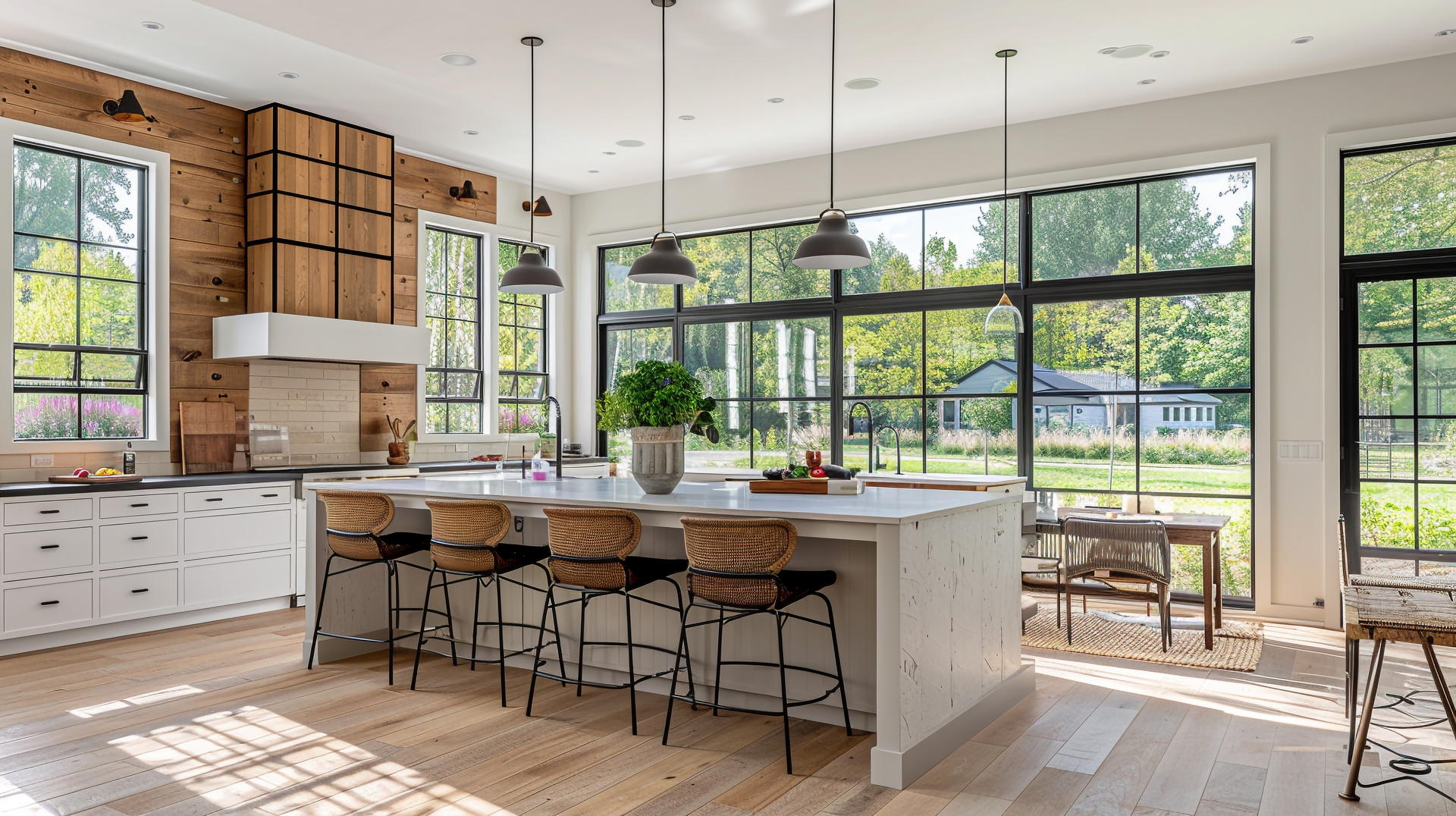
Hardwood floors have long been admired for their warmth, natural beauty, and timeless appeal. Many homeowners love the idea of carrying hardwood from living spaces straight into the kitchen for a seamless, connected look. Kitchens, however, present unique challenges—moisture, spills, heavy foot traffic, and constant activity.
Deciding whether hardwood is the right choice for a kitchen involves looking at the full picture: everyday lifestyle, design goals, and long-term upkeep. Here’s a helpful breakdown of the biggest advantages and disadvantages to guide a confident, well-informed decision.
The visual charm hardwood brings to a kitchen
One of the first things people notice about hardwood in a kitchen is how it instantly elevates the entire room. No other flooring material carries the same warmth, character, and natural movement. Grain variations, stain colors, and plank styles give the kitchen a custom-tailored look that feels welcoming and rich.
Beyond style, hardwood helps unify open-concept layouts. Instead of switching to tile, LVP, or stone, carrying hardwood throughout creates a fluid visual flow that makes the home feel larger and more cohesive. In design-driven kitchens, hardwood becomes part of the architecture, tying cabinetry, countertops, and lighting together beautifully.
Comfort and warmth underfoot
A kitchen is often the busiest spot in the home. Hours spent cooking, meal prepping, or entertaining mean the flooring underfoot matters. Hardwood naturally has a softer, warmer feel compared to tile or stone. Its slight give makes standing more comfortable, and it’s noticeably warmer on bare feet—especially in colder months or in homes without radiant heat.
For homeowners who prioritize comfort but still want high-end style, hardwood checks both boxes.
Refinishing extends the life of hardwood
One of hardwood’s biggest advantages in a kitchen—or anywhere—is the ability to refinish it. Depending on the species and thickness, floors can be sanded and refinished multiple times over their lifespan.
This means:
Surface damage can be removed.
Color changes can follow new design trends.
Wear and tear can be refreshed for a like-new look.
Few flooring choices offer this level of long-term adaptability. Hardwood is an investment that can evolve with the home.
Moisture sensitivity remains the biggest concern
Kitchens are moisture-heavy spaces. Steam, spills, splashes, and even small leaks can impact hardwood if not managed quickly. Unlike tile or waterproof vinyl, hardwood reacts to changes in humidity and moisture levels.
Potential issues include:
Gapping or warping during seasonal humidity shifts
Stains from long-sitting spills
Cupping or swelling from dishwasher or refrigerator leaks
While these issues can be minimized with proper sealing, climate control, and quick cleanup habits, they’re still important considerations when choosing hardwood for a kitchen.
Maintenance requirements may not suit every lifestyle
Hardwood in a kitchen does best with thoughtful care and consistent attention. For households that are very busy or prone to frequent spills, this may become an added stress.
Typical maintenance includes:
Cleaning spills immediately
Avoiding harsh cleaners
Using mats in high-risk areas (sink, dishwasher)
Keeping humidity between recommended levels
Homeowners who prefer low-maintenance flooring may find tile or rigid-core vinyl more forgiving.
Scratches and dents are possible in active kitchens
Kitchens are high-traffic zones with a lot of movement—dropped pans, sliding stools, pet claws, and daily foot traffic. Hardwood can show dents, scratches, or surface wear over time.
This isn’t necessarily a dealbreaker, especially with today’s textured and matte finishes that hide imperfections well. Species like oak and hickory also offer more durability, but homeowners should still expect natural aging and patina to appear over the years.
Engineered hardwood solves several traditional concerns
Many homeowners who love the look of hardwood but worry about moisture choose engineered hardwood for their kitchens.
Engineered planks offer:
Better dimensional stability
Resistance to humidity fluctuations
Real-wood beauty with added structural support
This makes engineered hardwood a popular compromise—especially in South Jersey and Central Jersey homes where seasonal humidity can fluctuate.
Deciding if hardwood is right for a kitchen
Hardwood is a premium option that brings undeniable beauty and warmth to kitchens. It suits homes where design, comfort, and long-term value matter. However, it’s not the perfect fit for every lifestyle, especially those wanting ultra-low-maintenance flooring.
A thoughtful decision depends on:
The home’s daily traffic and activity
Comfort and style priorities
Willingness to follow proper care routines
Interest in natural materials versus fully waterproof options
When chosen with intention, hardwood can be a stunning, lasting choice that truly elevates a kitchen.
Ready to explore hardwood for a kitchen?
Aroma’z Home is here to help homeowners in Cinnaminson, NJ and Hamilton, NJ create kitchen spaces that feel warm, inviting, and beautifully crafted. Our flooring experts guide every step—from selecting the right hardwood species to professional installation—always with your home’s comfort, style, and long-lasting performance in mind. Visit our showrooms today and discover flooring that brings the heart of your home to life.