
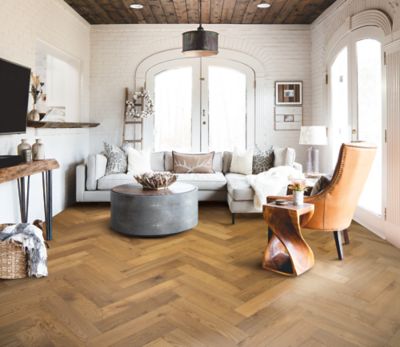
Few flooring choices match the warmth, elegance, and long-term value of natural wood. Hardwood floors have remained a gold standard in residential architecture for centuries, loved for their organic grain variations, rich color tones, and unmatched longevity. However, as home construction techniques and subfloor systems have evolved, the flooring industry has developed two distinct categories of real wood floors: traditional solid hardwood and technologically advanced engineered hardwood. While both options feature real, authentic wood on their surface, their internal construction, environmental adaptability, and installation requirements are vastly different. Understanding these structural distinctions is key to making an informed investment that performs flawlessly for decades in your specific living environment.
Decoding Solid Hardwood: The Heritage Flooring Choice
Solid hardwood is crafted from a single, continuous piece of solid timber cut directly from a log. Typically manufactured at a thickness of 3/4 inch, solid wood planks feature traditional tongue-and-groove side profiles that lock together during installation.
The hallmark of solid hardwood is its extraordinary lifespan. Because the entire plank consists of solid natural wood, it can be sanded down and refinished multiple times over its lifetime. If a homeowner decides to change their interior color scheme ten years down the road, solid hardwood can simply be sanded back to raw lumber and re-stained in a completely new hue. However, solid lumber is also highly sensitive to ambient humidity and moisture. In humid summers, solid planks absorb atmospheric moisture and expand; in dry winters, they release moisture and contract. This natural movement can lead to subtle gapping, cupping, or squeaking if moisture levels are not carefully managed.
Understanding Engineered Hardwood: Advanced Structural Integrity
Engineered hardwood was developed to solve the dimensional instability of solid wood while keeping the exact look and feel of authentic lumber. Unlike a single solid plank, engineered hardwood is a composite material built from multiple cross-laminated layers of high-density plywood or hardwood backing, capped with a top layer of real solid hardwood known as the "lamella" or "wear layer."
The cross-ply construction of engineered hardwood is an engineering feat. Each internal layer is glued with its grain running perpendicular to the adjacent layer. This cross-grain orientation counteracts natural wood movement, preventing the plank from expanding, contracting, cupping, or warping when exposed to fluctuations in humidity and temperature. The top wear layer—ranging from 1.2mm up to 6mm in thickness depending on the quality—consists of genuine oak, maple, hickory, or exotic wood species, making it visually indistinguishable from solid hardwood once installed.
Head-to-Head Comparison: Where and How to Install
Selecting between solid and engineered hardwood comes down to the specific room environment, your subfloor structural type, and your local regional climate.
Material Composition and Refinishing: Solid hardwood consists of 100% single-piece timber and can be sanded and refinished multiple times over its life (typically 3 to 5+ times). Engineered hardwood features a multi-layer plywood core topped with a real wood layer and can be refinished 1 to 3 times depending on the thickness of that top layer.
Moisture Resistance and Below-Grade Use: Solid hardwood has low moisture resistance and is prone to cupping or gapping, meaning it should never be installed in subterranean basements or directly over concrete slabs. Engineered hardwood provides high dimensional stability against humidity, making it suitable for on, above, or below-grade installations.
Subfloor Compatibility: Solid hardwood requires a wood subfloor (such as plywood or OSB) because it must be blind-nailed or stapled down. Engineered hardwood offers maximum installation versatility and can be nailed, glued down directly to concrete slabs, or floated over a high-density acoustic underlayment.
Radiant Heating Systems: If your home features subfloor radiant heating systems, engineered hardwood is the strongly recommended choice, as its structural stability easily handles direct thermal changes without cracking.
Decades of Industry Leadership and Craftsmanship
Choosing the perfect floor requires balancing high-end aesthetic preferences with technical structural needs. For decades, our mission has been grounded in guiding homeowners through these complex choices with clarity, expertise, and integrity. Founded in 1967, our business has built a legacy of excellence across New Jersey by offering top-tier products, transparent consultations, and professional flooring installation services tailored to real-world living conditions. Learn more about our story, our client-first philosophy, and our full scope of home improvement solutions by exploring our About Us page.
Selecting Your Ideal Hardwood Solution
Both solid and engineered hardwood bring real natural beauty, prestige, and long-term resale value to your residence. By assessing your subfloor construction, room locations, and lifestyle demands, you can pick the option that delivers stunning aesthetics and long-lasting durability.
Ready to see and feel the difference between solid and engineered hardwood samples in person? Our knowledgeable design specialists are standing by to help you choose the ideal wood species, plank width, and finish for your upcoming project. Visit us at one of our convenient locations today to start exploring our extensive wood flooring collections.