
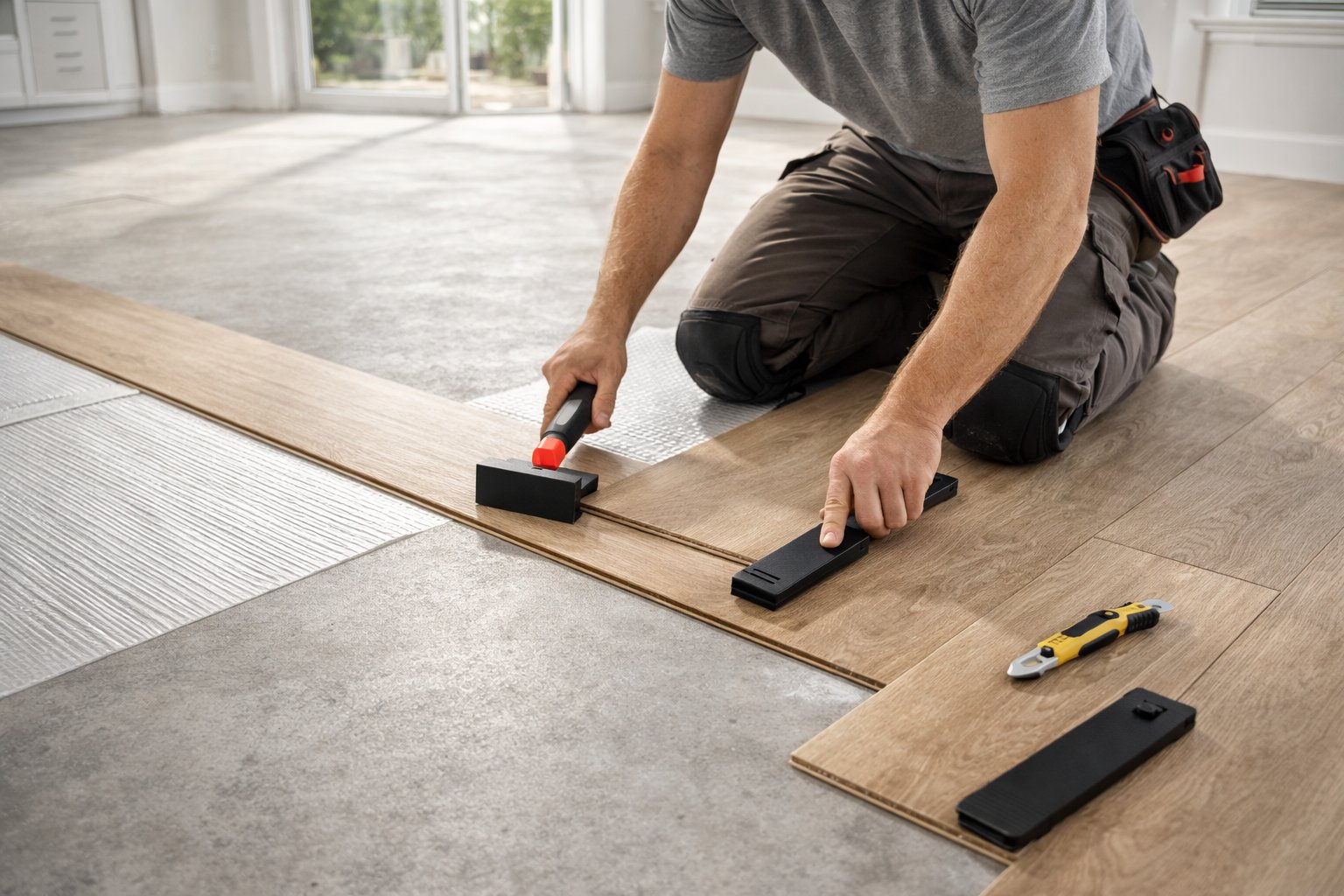
Concrete slabs are common in basements, ground-level rooms, condos, and many New Jersey homes built on slab foundations. Pairing these surfaces with luxury vinyl flooring has become a popular remodeling choice thanks to its durability, comfort, and modern visuals. However, installing luxury vinyl flooring over concrete is not as simple as laying planks and calling it a day. Moisture, flatness, temperature, and preparation all play critical roles in achieving a long-lasting, professional result.
Getting the installation right from the start protects the flooring investment, prevents future issues, and ensures the finished space looks and performs exactly as intended.
Why concrete slabs require extra attention
Concrete may appear solid and stable, but it presents unique challenges that other subfloors do not. Unlike wood, concrete can retain moisture for long periods and may not always be perfectly level. Even small imperfections can telegraph through vinyl flooring over time.
Luxury vinyl products are engineered to be resilient, but they still rely on proper subfloor conditions. Addressing concrete-specific concerns upfront helps avoid problems such as gapping, buckling, adhesive failure, or uneven wear patterns later on.
Understanding moisture before installation begins
Moisture is the single most important factor when installing luxury vinyl flooring over concrete slabs. Concrete is porous and can release moisture vapor long after it appears dry to the touch. If this moisture is not managed correctly, it can compromise both click-lock and glue-down vinyl installations.
Professional installers typically conduct moisture testing before installation. Depending on the results, solutions may include:
Installing a moisture vapor barrier
Using a moisture-resistant underlayment
Applying a liquid moisture mitigation system
Skipping this step often leads to premature flooring failure, even with high-quality materials.
Preparing the slab for a smooth finish
A clean, flat, and stable surface is essential for luxury vinyl flooring to perform properly. Concrete slabs frequently have small cracks, dips, or surface residue from previous flooring installations.
Proper preparation usually involves:
Removing old adhesives, paint, or debris
Filling cracks and low spots with a leveling compound
Grinding down high spots to achieve uniform flatness
Luxury vinyl manufacturers often specify maximum allowable subfloor variations. Meeting these standards ensures the planks lock properly and feel solid underfoot.
Choosing the right luxury vinyl construction
Not all luxury vinyl flooring is the same, especially when it comes to concrete installations. The right construction depends on the space, moisture conditions, and performance expectations.
Some considerations include:
Rigid core vinyl for added stability over minor subfloor imperfections
Glue-down vinyl for areas requiring maximum moisture control
Attached underlayment options for added comfort and sound reduction
Selecting the appropriate product ensures better performance, especially in basements, multi-level homes, and high-traffic areas.
Expansion space and temperature considerations
Luxury vinyl flooring expands and contracts slightly with temperature changes. Concrete slabs can be cooler than other subfloors, especially below grade, which makes expansion planning even more important.
Maintaining proper expansion gaps around walls, cabinets, and fixed objects allows the flooring to move naturally without causing buckling or separation. Acclimating the flooring materials to the room’s temperature before installation also helps minimize post-installation movement.
Installing click-lock vs glue-down vinyl over concrete
Both click-lock and glue-down luxury vinyl can be installed over concrete, but each method has specific advantages.
Click-lock systems offer faster installation and easier plank replacement if needed. They typically require a flat slab and often include an underlayment layer or separate moisture barrier.
Glue-down vinyl provides a more permanent bond and is often preferred in commercial spaces or moisture-prone areas. It requires precise adhesive application and strict adherence to drying times.
Choosing the right installation method depends on the room’s conditions and long-term performance goals.
Common mistakes that lead to flooring problems
Even high-quality luxury vinyl flooring can fail if installation shortcuts are taken. Some of the most common issues seen after improper concrete installations include:
Skipping moisture testing
Ignoring minor slab unevenness
Using the wrong adhesive or underlayment
Rushing acclimation time
These mistakes may not show immediate signs but often surface months later as visible damage or performance issues.
When professional installation makes the difference
Installing luxury vinyl flooring over concrete requires more than basic flooring knowledge. Experience with moisture management, slab preparation, and manufacturer specifications plays a major role in long-term success.
Professional installers understand how to evaluate slab conditions, select the right materials, and execute each step with precision. This approach protects both the flooring product and the home itself, delivering results that look great and perform reliably for years.
Planning a luxury vinyl flooring installation over a concrete slab in South or Central New Jersey? At Aroma'z Home, our flooring experts bring decades of experience to every project, guiding each installation with care, precision, and proven methods. Visit our Cinnaminson or Hamilton showroom to explore luxury vinyl options and schedule a professional consultation with our home improvement services team. Contact us today!